Fighting bad search results
since 2018.
Built by two research scientists from the German Aerospace Center who got tired of spending four months on the literature review for every EU grant proposal. In 2018 we trained a computer to do the research for us. Kwintely is what happened next.
Kwintely shipped context search in 2018 ... years before ChatGPT went live, and before “AI” became a thing every SaaS marketed itself around.
The engine has had eight years to mature. We know what context search gets right, where it breaks, and how to combine it with classical boolean search in a single workflow ... because we’ve been shipping it to deep-tech customers the whole time.
Others rebranded old search as AI. We built context search before there was a category.
The origin of context search
In 2018 we were materials scientists at the German Aerospace Center (DLR) in Braunschweig, applying machine learning to fibre-reinforced composites for aircraft structures. The research was the fun part. The grant proposals were not.
Every EU proposal demanded a complete state-of-the-art review ... prior art across dozens of patent databases, scientific repositories, and technical journals. Keyword search took us four months. And at the end of those four months, we still didn’t know what we’d missed. There was no way to be confident we’d found the right answer.
So we did what any two frustrated engineers with a machine learning background would do: we trained a computer to do the research for us. Four months collapsed to three days. More importantly ... for the first time ... we could see what we’d been missing: filings in other languages, in adjacent IPC classes, using terminology we’d never have guessed to search for.
Four months became three days ... and for the first time, we could see what we’d been missing.
The key was a keyword-free approach we call context search: finding similar concepts and methods without needing the same words to describe them. We built it in 2018 ... long before ChatGPT was live or “AI search” was a category. We’ve been refining it ever since.
Kwintely is what happened after that breakthrough: the same technology, now running across 295 million patents, scientific papers and clinical trials on our own servers in Braunschweig, for 79 deep-tech customers who hire us to find what keyword search misses.
Eight years of shipping to researchers and engineers















Before KWINTELY there was 90% noise. Now I get 90% signal. Your platform is the missing piece for ad-hoc evaluation in my innovation workshops.

KWINTELY just saved us 3 months time identifying the white spot in the patent landscape. Plus, it found documents highly relevant but unknown.

The results are very good. Among the first 10 results, 6 hits were spot on. Impressive, because compiler structures is quite a niche for prior art research.
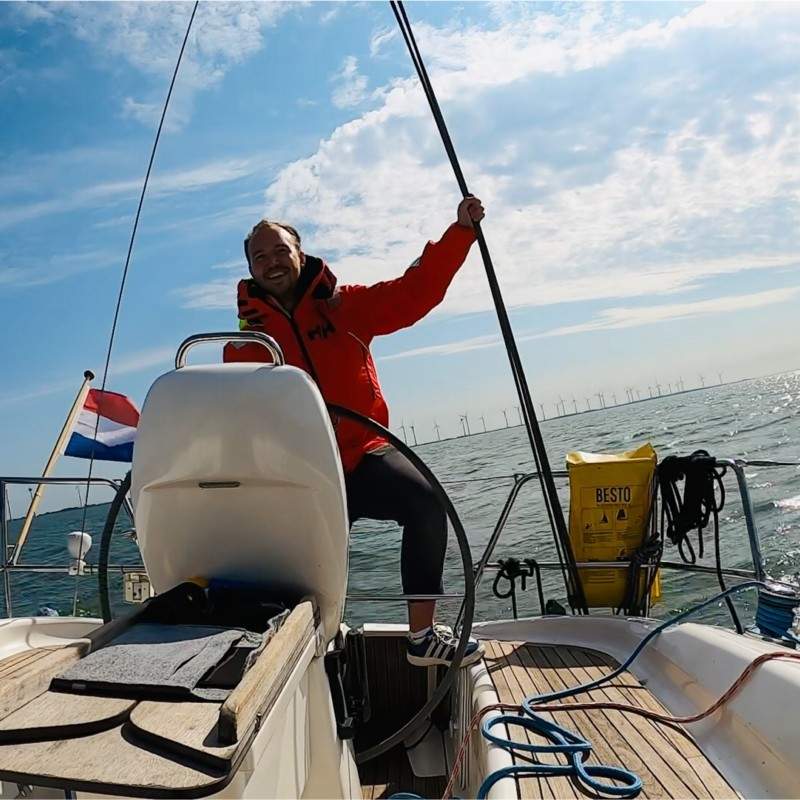
Managing directors

Dr.-Ing. Lennart Weiß
Co-founder · CEO
Mechanical-engineering PhD (TU Braunschweig); research stints at Oxford (Impact Engineering) and UBC along the way. Twelve years as a Scientific Researcher at the German Aerospace Center (DLR), applying machine learning to fibre-reinforced composites for aircraft. Earlier: four years as a Calculation Engineer at Toyota Gazoo Racing Europe in Formula 1. Co-invented the context-search approach that became Kwintely.

Dr.-Ing. Hardy Köke
Co-founder · CTO
PhD from the University of Magdeburg; research stint at the Royal Melbourne Institute of Technology (RMIT) in Australia. Previously at the German Aerospace Center (DLR), same team as Lennart: machine learning for fibre-reinforced aircraft materials. Long track record in optimisation algorithms, machine learning, neural networks, and high-performance computing ... the engine-room expertise behind Kwintely’s context-search approach, which he co-invented.
What we don’t do
Things we’ve chosen against. Most are easier said than built.
- We don’t train models on your queries or uploads. Not anonymised, not aggregated, not “for improving the service.” Your research stays yours.
- We don’t route your data through third-party AI providers by default. Our search and reasoning models run on our own infrastructure in Braunschweig. External LLMs are available as an opt-in only, scoped to your contract.
-
We don’t lock your data in proprietary formats.
Workflows export as
.kflow, results export as.xlsxor.pdf, any time. If you ever leave, you walk away with everything you built. - We don’t sell analytics about how you use Kwintely. No data brokers. No behavioural exports. No shared customer signals. We monetise through subscriptions, not through reselling what you do.
Backed by the deep-tech ecosystem







Work with us ... three ways in.
SaaS platform subscription. Research engagements and consulting. API or MCP integration. A fifteen-minute clarity call with a founder tells you which one fits ... beats an hour of slides.
Prefer email? Write to kontakt@kwintely.de.